Layer_1 (4)

Selected References

A sample of advisory and engineering assignments across Africa, spanning industrial energy, decarbonisation, climate finance and ESG.
Layer_1 (6)
Industrial Park 2

Engineering – Feasibility Study for an Industrial Heating & Cooling Network – PK24 Industrial Zone

EDF Côte d’Ivoire | Côte d’Ivoire | Feasibility study for waste-heat recovery, industrial heat network, and trigeneration | 2024

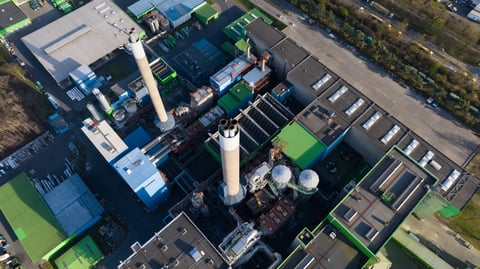
EDF Côte d’Ivoire commissioned this study to determine whether excess heat from a Biovea-type 23 MW biomass plant could be valorised through an industrial heat network in PK24, addressing the need for a viable solution for industrial heat, cooling and trigeneration. We supported the client by modelling low-pressure steam extraction, assessing network design and trigeneration uses, mapping potential subscribers and testing the economics under different demand assumptions. The study identified 9 relevant industrial users, highlighted Brassivoire as a major potential anchor off taker, and found that the concept could deliver 38.1 MWth through a 10 km DN350 network while increasing overall plant efficiency from 21% to 60%. It also showed an attractive simulated payback of 2.8 years in the base case and 5.1 years under a 50% demand reduction scenario. The project supports cleaner energy use, industrial infrastructure and emissions reduction.
SDGs aligned: SDG 7; SDG 9; SDG 13.
Biomass Power Plant

Advisory – BIOVEA Design of the GHG Project for a 46MW Biomass Power Plant

Biovea Energie | Côte d’Ivoire | GHG project design and ex-ante carbon quantification for a grid-connected biomass power plant | 2025

Biovea Energie needed to assess the climate impact of its 46 MW Ayebo biomass power plant, prepare the basis for a future PDD, and position the project for regulatory alignment, operational improvement, sustainable procurement, and access to carbon markets. The mandate focused on designing the GHG project under ACM0018 v06, ISO 14064-2, and the GHG Protocol, including the assessment of the baseline scenario, additionality, relevant sources and sinks, monitoring arrangements, and safeguard requirements. The study confirms a plant made up of two 23 MW units, supplied by around 520,000 tonnes of agricultural residues per year sourced within a 60 km radius, with expected generation of about 348 GWh per year, equivalent to electricity access for 1.7 million people. It also highlights the productive use of residues that would otherwise decay or be openly burned, a supply chain involving around 12,000 palm farmers, and the creation of about 500 direct and 1,000 indirect jobs. The project is presented as a first-of-its-kind initiative in Côte d’Ivoire and is supported by a structured monitoring framework covering electricity, biomass, moisture, transport, and fossil fuel use, with dedicated governance and data archiving requirements. The value created lies in preparing the project for carbon certification and strengthening its sustainability positioning.
SDGs aligned: SDG 3; SDG 5; SDG 7; SDG 8; SDG 9; SDG 13.
AdobeStock_1279070935

Advisory – AutoX’s Product Carbon Footprint Assessment

AutoX | South Africa | Product Carbon Footprint Assessment | 2025

AutoX needed to quantify the cradle-to-grave carbon footprint of its lead-acid battery portfolio, identify the main emissions hotspots, and prepare for tighter battery disclosure and carbon requirements in its export markets, especially in Europe. We were mandated to deliver a product carbon footprint assessment aligned with ISO 14067:2018, using an average battery representative of more than 350 models and covering raw materials, manufacturing, transport, use, and end-of-life across South Africa, Southern Africa, the UK, and Ireland. Our approach combined primary operational and supplier data with recognised secondary databases and modelled three charging scenarios to reflect different real-world use patterns. The study found that raw materials and electricity were the key impact drivers: raw materials accounted for 26.26 kgCO2eq per battery, with lead contributing 77% of that phase, while manufacturing accounted for 18.04 kgCO2eq and was almost entirely driven by electricity use. Depending on the charging scenario and country electricity mix, the total carbon footprint ranged from 56.4 to 147.4 kgCO2eq per battery, or 0.195 to 0.510 kgCO2eq per useful kWh. The project gave AutoX a compliance-ready baseline and a clear decarbonisation roadmap, highlighting recycled lead and lower-carbon electricity as the main levers. It also showed that replacing 20% of grid electricity with photovoltaic supply could reduce manufacturing emissions by around 19%.
SDGs aligned: SDG 7; SDG 9; SDG 12; SDG 13.
AdobeStock_680955410

Advisory – Life Cycle Assessment & Carbon Modelling Majuba Solar PV Power Plant

Mpamot | South Africa | Life Cycle Assessment and carbon credit market analysis for a utility-scale solar PV plant | 2026

For the Majuba Solar PV Project, Mpamot needed an order-of-magnitude but decision-useful view of life-cycle emissions and carbon-credit potential for a 31.67 MWp solar plant planned near Volksrust in Mpumalanga. Our mandate was to quantify cradle-to-grave emissions, identify the main carbon hotspots, test the effect of longer project life and recycling assumptions, and estimate avoided emissions under different South African grid scenarios. Using an ISO 14040/14044 and GHG Protocol-aligned methodology, we modelled raw material production, transport, construction, component replacement during use, and end-of-life treatment. The results showed total life-cycle emissions of 83,807 tCO₂eq and a carbon intensity of about 56 gCO₂eq/kWh over 25 years. The raw material phase accounted for 64% of total emissions, led by PV module manufacturing and mounting structure steel, while the use phase contributed 31%, driven mainly by replacement of modules, inverters and transformers. Extending the project life to 40 years increased total emissions to 98,013 tCO₂eq but reduced carbon intensity to 42.2 gCO₂eq/kWh, demonstrating the environmental value of longer operation. The plant’s carbon payback was estimated at around 1.3 to 2.6 years, and avoided emissions ranged from 810,241 to 1,561,102 tCO₂ over the 27-year project timeline. Indicative carbon-credit revenues ranged from USD 2.59 million to USD 12.93 million. The study gives Mpamot a clear framework for procurement and optimisation decisions, particularly around lower-carbon supply chains, component lifetime extension and circular end-of-life strategies, while confirming the project’s strong contribution to South Africa’s low-carbon power transition.
SDGs aligned: SDG 7; SDG 9; SDG 12; SDG 13.
AdobeStock_326198116

Advisory – Life Cycle Assessment & Carbon Modelling – Kleinzee Wind/BESS Project

Mpamot | South Africa | Life Cycle Assessment and Carbon Credit Market analysis for a wind farm and BESS | 2026

Mpamot required a refined carbon assessment of the Kleinzee project to clarify methodological assumptions while preserving a decision-useful view of the project’s climate performance and carbon-credit potential. We were tasked with updating the life cycle assessment of the 397.6 MW Kleinzee Wind Farm and 193 MWh BESS in South Africa, clarifying cut-off assumptions, exclusions and end-of-life treatment, and confirming the project’s avoided-emissions and value-creation potential. Using ISO 14040/14044 and the GHG Protocol framework, and a cradle-to-grave boundary based on 1 kWh delivered to the grid over 25 years, we modelled the project from raw materials through construction, use and end-of-life, relying on feasibility-stage client data, Ecoinvent v3.11, ICE v4 and Orki LCA. The assessment confirms a total footprint of 551,608 tCO₂eq and a carbon intensity of 14.39 gCO₂eq/kWh. Raw materials account for 79% of emissions, the use phase 15%, and construction and end-of-life about 3% each, with the BESS replacement cycle remaining a key driver. Sensitivity analysis also shows that avoided-burden recycling assumptions could lower intensity from 14.39 to 13.26 gCO₂/kWh, while a 14-year BESS lifetime could reduce total emissions by about 13% and 70% recycled steel by about 6%. The project therefore offers Mpamot both a robust carbon baseline and a clearer decarbonisation roadmap, while reinforcing its contribution to South Africa’s clean-energy transition.
SDGs aligned: SDG 7; SDG 9; SDG 12; SDG 13.
AdobeStock_720967863

Advisory – Life Cycle Assessment & Carbon Modelling Wind/Solar/BESS Project

Mpamot | South Africa | Life Cycle Assessment and carbon credit market analysis for a hybrid renewable energy project (wind + solar PV + BESS) | 2026

Mpamot needed a robust, feasibility-stage understanding of the carbon footprint and carbon-credit potential of the Aberdeen Hybrid Project, a large renewable energy development combining 196 MW of wind, 80 MWp of solar PV and a 280 MWh battery energy storage system in the Eastern Cape. Our mandate was to quantify full life-cycle greenhouse gas emissions, identify the main carbon hotspots, test key assumptions, and estimate avoided emissions and potential market value from carbon credits. We carried out a cradle-to-grave life cycle assessment in line with ISO 14040/14044 and the GHG Protocol Product Standard, using project-specific design assumptions together with recognised databases and modelling tools. The analysis covered raw materials, transport, construction, operation and replacements, and end-of-life treatment, with results normalised per kWh delivered to the grid. The study found total life-cycle emissions of 604,489 tCO₂eq and a carbon intensity of 24.3 gCO₂eq/kWh, with raw materials dominating at 64% of total emissions, followed by the use phase at 30%, largely due to battery and module replacements. Despite this, the project shows strong climate performance, with a carbon payback of roughly 0.6 to 1.2 years and avoided emissions estimated at 14.1 to 26.8 million tCO₂ over the project life. Indicative carbon-credit revenue was estimated at USD 43.47 million to USD 217.44 million. The work gives Mpamot a clear basis for design optimisation, supplier engagement, low-carbon material sourcing and investment positioning, while confirming the strategic value of hybrid renewable systems for South Africa’s decarbonisation pathway.
SDGs aligned: SDG 7; SDG 9; SDG 12; SDG 13.
Copie de Iroko Africa Presentation (1)

Advisory – Life Cycle Assessment & Carbon Modelling Arnot Solar PV Power Plant

Mpamot | South Africa | Life Cycle Assessment and carbon credit market analysis for a utility-scale solar PV plant | 2026

For the Arnot Solar PV Project in Mpumalanga, Mpamot required a clear estimate of the plant’s life-cycle carbon footprint and its potential to generate avoided emissions and carbon-credit value. Our mandate was to assess the environmental profile of the 12.82 MWp solar PV plant at feasibility stage, identify the main emission drivers, and translate the results into strategic insights for design, sourcing and long-term value creation. We applied a cradle-to-grave LCA methodology aligned with ISO 14040/14044 and the GHG Protocol Product Standard, covering materials, transport, construction, component replacements and end-of-life treatment over a 25-year operating life, with a sensitivity test extending operations to 40 years. The assessment showed total life-cycle emissions of 32,970 tCO₂eq and a carbon intensity of 51.66 gCO₂eq/kWh, which sits within the typical international range for utility-scale PV. The raw material phase was the largest contributor at 65%, driven mainly by PV module manufacturing and galvanised steel structures, while the use phase accounted for 30% because of module and inverter replacements. Extending the plant life to 40 years increased total emissions moderately but improved carbon intensity by about 25%, down to 38.7 gCO₂eq/kWh. The project’s carbon payback was estimated at about 1.3 to 2.6 years, and avoided emissions were estimated at 348,594 to 669,049 tCO₂ over 27 years, corresponding to indicative carbon-credit revenues of USD 1.11 million to USD 5.53 million. This work gives Mpamot a practical basis for improving supplier selection, extending component life and strengthening the climate value proposition of the project.
SDGs aligned: SDG 7; SDG 9; SDG 12; SDG 13.
AdobeStock_2035373309

Advisory – Economic and Organisational Analysis of AGED and Reach Italia Carbon Credit Projects

LuxDev | Burkina Faso | Economic, organisational and financial analysis of community AFOLU carbon projects | 2025

LuxDev commissioned this study to assess whether two community-based carbon credit projects led by AGED and Reach Italia in Burkina Faso could deliver a robust, viable and replicable financing model for rural development under fragile institutional and market conditions. Our mandate was to analyse the full economic and organisational model of these Plan Vivo-certified nature-based projects, from project design and certification to carbon credit sales, revenue sharing and post-credit monitoring. We combined document review, benchmarking and five semi-structured interviews with key public, private and project stakeholders, then analysed findings through governance, capacity, economics, community anchoring and market-access lenses. The study showed that while both projects are credible high-integrity community initiatives with strong local co-benefits, their model remains structurally fragile: feasibility, PDD and MRV phases are costly and complex; governance is fragmented; local ownership is limited by dependence on external consultants; and revenue stability is exposed to voluntary carbon market volatility. Average development costs were estimated at USD 13.97/tCO2e, significantly above larger AFOLU projects, although historical sales of 8,384 tCO2e at EUR 7–17/tCO2e confirm an ability to capture value through strong community positioning. The study translated these findings into 17 operational recommendations, including clearer project leadership, stronger budgeting tools, more transparent contracts, digitalised MRV, buyer diversification and long-term price-stabilising agreements. The value created lies in giving LuxDev and its partners a practical roadmap to move from externally supported pilot projects toward more autonomous, traceable and scalable carbon finance models.
SDGs aligned: SDG 13; SDG 15; SDG 8.
Copie de Iroko Africa Presentation (2)

Advisory – Life Cycle Assessment & Carbon Modelling Duvha Solar PV Power Plant

Mpamot | South Africa | Life Cycle Assessment and carbon credit market analysis for a utility-scale solar PV plant | 2026

Mpamot asked us to evaluate the environmental performance and carbon-credit potential of the Duvha Solar PV Project, a 22.83 MWp plant planned near eMalahleni in Mpumalanga. The challenge was to produce a credible, feasibility-stage carbon assessment that could support design decisions, future procurement choices and the project’s wider decarbonisation case. Our mandate covered full life-cycle greenhouse gas modelling, hotspot analysis, lifetime sensitivity testing and estimation of avoided emissions and possible carbon-credit revenues. We carried out a cradle-to-grave LCA in accordance with ISO 14040/14044 and the GHG Protocol, using project-specific technical assumptions combined with recognised secondary datasets. The study found total life-cycle emissions of 60,259 tCO₂eq and a carbon intensity of 53.03 gCO₂eq/kWh over 25 years. The raw material phase contributed 64.5% of total emissions, with PV modules and steel mounting structures clearly dominating, while the use phase contributed 30.5%, mostly due to replacements. A 40-year sensitivity scenario showed that extending operating life would raise total emissions by about 17% but improve carbon intensity by roughly 25%, to 39.9 gCO₂eq/kWh. The project also demonstrated strong climate value, with a carbon payback of approximately 1.3 to 2.5 years and avoided emissions estimated at 619,103 to 1,189,662 tCO₂ depending on grid decarbonisation assumptions. Indicative carbon-credit revenues ranged from USD 1.98 million to USD 9.83 million. The assessment gives Mpamot a solid evidence base to prioritise low-carbon module sourcing, durability improvements, and end-of-life recovery strategies while reinforcing the strategic contribution of the project to South Africa’s energy transition.
SDGs aligned: SDG 7; SDG 9; SDG 12; SDG 13.
Paper Manufacturing-1

Engineering – Energy Efficiency Audit Paper Industry

ACIPAC | Côte d’Ivoire | Industrial Energy Audit & Energy Performance Improvement Plan | 2025

ACIPAC needed to reduce electricity costs, improve operational control and strengthen the energy performance of its continuously operated industrial site. We supported the company through a full-site energy audit covering administration, plastic sachet and film production, tissue paper production and maintenance areas, with the objective of identifying major energy uses, quantifying savings opportunities and defining a practical roadmap for implementation. Our approach combined data analysis, site investigations, equipment-level energy mapping, power-quality checks and techno-economic assessment in line with ISO 50002 and NF 16247-3 principles. The audit established a 2024 baseline electricity consumption of 5,823,000 kWh for an annual electricity cost of FCFA 554.6 million, and showed that the main energy drivers were motor systems, heating processes and compressed air. We then prioritised a set of high-impact measures including compressed-air leak reduction and pressure optimisation, improved HVAC settings, insulation of extruder heating zones, replacement of selected motors with premium-efficiency models, deployment of a 500 kWp self-consumption solar installation and implementation of a global metering system. Altogether, the recommended actions could generate annual savings of 2,051,760 kWh, equivalent to a 35% reduction in electricity consumption, deliver FCFA 194.97 million in yearly cost savings and avoid around 1,231 tCO2e per year. The project provided ACIPAC with a clear investment roadmap to improve industrial competitiveness while accelerating decarbonisation.
SDGs aligned: SDG 7; SDG 9; SDG 12; SDG 13.
AdobeStock_622428600

Advisory – Life Cycle Assessment & Carbon Modelling Tutuka Solar PV Power Plant

Mpamot | South Africa | Life Cycle Assessment and carbon credit market analysis for a utility-scale solar PV plant | 2026

Mpamot commissioned us to assess the life-cycle carbon footprint and carbon-credit potential of the Tutuka Solar PV Project, a 28.93 MWp utility-scale installation near Standerton in Mpumalanga. The client’s challenge was to understand, at feasibility stage, where the main emissions would occur across the asset life cycle and how the project could be positioned for stronger environmental performance and future carbon value. Our mandate covered full GHG quantification, hotspot identification, sensitivity testing on operating life and recycling assumptions, and estimation of avoided emissions and indicative credit revenues. We carried out a cradle-to-grave LCA aligned with ISO 14040/14044 and the GHG Protocol, combining project-specific technical inputs with recognised LCA databases. The results showed total life-cycle emissions of 77,299 tCO₂eq and a carbon intensity of 56.3 gCO₂eq/kWh over 25 years. The raw material phase represented 64% of total emissions, driven largely by PV module production and steel mounting systems, while the use phase contributed 31% because of planned component replacement. A 40-year scenario increased total emissions to 90,496 tCO₂eq but improved carbon intensity by about 25%, reducing it to 42.4 gCO₂eq/kWh. The plant’s carbon payback was estimated at 1.5 to 2.8 years, and avoided emissions were projected at 743,914 to 1,433,606 tCO₂ depending on the future grid-emission pathway, with indicative carbon-credit revenues of USD 2.38 million to USD 11.87 million. The study provides Mpamot with a strong technical basis to optimise sourcing, extend asset life and strengthen circularity, while confirming the project’s meaningful contribution to South Africa’s clean-energy transition.
SDGs aligned: SDG 7; SDG 9; SDG 12; SDG 13.
Agroprocessing

Advisory – Climate Risks Assessment in South Africa’s Agro-Processing Industries

UNIDO | South Africa | Climate Adaptation Technical Paper | 2024

UNIDO commissioned this technical paper to understand how climate change is reshaping risk across South Africa’s agro-processing sector, where water dependence, energy intensity, and exposure to region-specific agricultural supply chains make industrial performance increasingly vulnerable to drought, heat stress, flooding, and infrastructure disruption. Our mandate was to identify the most climate-sensitive agro-processing subsectors, assess the resilience of their water and energy systems, and translate the findings into a practical adaptation agenda. To do this, we combined a review of more than 120 sources with climate hazard analysis using Climate Viz, scenario-based projections under SSP2-4.5 and SSP5-8.5, OCARA-based value chain risk screening, energy case analysis, and stakeholder interviews focused on industrial water resilience. The study showed that fruit and vegetable processing, beverages, and dairy should be prioritised for adaptation action because of their economic weight and high dependence on water and thermal energy, while poultry and sugar face severe localised risks in specific regions. It also highlighted the scale of systemic pressure: the sector consumes around 130 million m³ of water annually, South Africa is already using nearly all of its available water supply, and national water deficits could reach 2.7 to 3.8 billion m³ per year by 2030. The paper converted this diagnosis into an actionable roadmap centred on water efficiency, reuse and recycling, diversified supply systems, thermal and electrical efficiency, and climate risk integration into industrial planning. The result was a decision-ready resilience framework to help UNIDO and its partners prioritise investment, strengthen food-system security, and support more climate-resilient industrial development.
SDGs aligned: SDG 9; SDG 12; SDG 13.
Agrihood

Advisory – Ferney Agrihood Net Zero Roadmap

Ciel Properties | Mauritius | Net Zero & Decarbonisation Roadmap | 2026

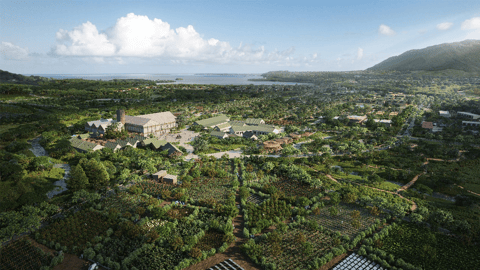
Ferney needed a credible net zero pathway for both its current operations and a future mixed-use territorial development in Mauritius, where tourism-related travel, imported construction materials, private mobility patterns and grid dependence all shape the carbon profile. Our mandate was to establish the present baseline, identify the main future emissions drivers, and translate the findings into a practical decarbonisation roadmap supported by monitoring tools. We combined a greenhouse gas inventory for existing operations, a life cycle assessment of the future development, an embedded carbon analysis across the main building typologies, an operational emissions review by phase and asset class, and energy scenario comparisons, while also supporting onboarding to the ORKI platform for long-term tracking. The work showed that the project’s carbon exposure is concentrated around a limited number of structural levers: procurement and specification of construction materials, building and infrastructure design choices, energy strategy, residential mobility and lifestyle assumptions, tourism positioning, and circular synergies between activities. A key strategic insight was that sourcing lower-carbon materials can be more decisive than design optimisation alone in the Mauritian context. The roadmap therefore prioritised low-carbon and EPD-backed materials, decentralised energy, residential right-sizing, ecosystem symbiosis, low-carbon mobility, regional tourism positioning, project-level LCA targets, and a carbon offset strategy aligned with Ferney’s broader vision. The result was a decision-ready net zero framework to guide design development, procurement standards, energy masterplanning, and implementation governance across the different phases of the project.
SDGs aligned: SDG 7; SDG 9; SDG 11; SDG 12; SDG 13.
AdobeStock_1423588769

Advisory – BIOVEA Carbon Market Assessment for a 46 MW Biomass Power Plant

Biovea Energie | Côte d’Ivoire | Carbon market analysis and certification strategy for a biomass power plant | 2024

Biovea Energie needed to assess the carbon-credit potential of its 46 MW biomass project in Aboisso, understand carbon market trends, confirm project eligibility, and identify the most suitable certification pathway in a market facing tighter integrity requirements for renewable energy projects. We supported the client by reviewing carbon market dynamics, analysing the Africa and Côte d’Ivoire context, and comparing Verra, Gold Standard and S10X through a multi-criteria assessment based on reputation, cost-effectiveness, support and risk exposure. The analysis confirmed that the project uses biomass residues to produce grid-connected electricity, could supply around 1.7 million people, and is expected to reduce more than 340,000 tCO2e per year. It provided Biovea with an evidence-based certification strategy and positioned the project as a strong climate-finance opportunity.
SDGs aligned: SDG 7; SDG 8; SDG 13.
AdobeStock_2086245756

Advisory – Ferney Agrihood Energy Strategy Study

Ciel Properties | Mauritius | Energy Demand & Renewable Supply Strategy | 2025

Ferney needed a robust basis for selecting the most appropriate energy model for its future Smart City development, balancing long-term electricity demand, carbon performance, technical feasibility and urban integration. We supported Ferney in modelling the project’s energy needs across its 20-year build-out and in comparing renewable electricity strategies aligned with its climate and ESG ambitions. Our approach combined benchmark-based energy demand modelling by facility type and development phase, optimisation through thermal substitutions, and a multi-criteria assessment of two supply options: a centralised 10 MWp grid-tied PV plant and a decentralised building-by-building PV hybrid system with storage. The study covered residential typologies, eco-resort, healthcare, industrial, mixed-use, offices, leisure and support infrastructure. At full build-out, baseline electricity demand was estimated at 32,687 MWh/year, reduced to 26,196 MWh/year through demand optimisation and thermal substitution, while a high-demand sensitivity scenario exceeded 42,000 MWh/year. The centralised PV option significantly reduced grid dependence and emissions, but remained constrained by the absence of storage, land use requirements and limited adaptability to evolving demand. The decentralised hybrid option achieved an average self-generation rate of 92%, reduced grid reliance to below 10%, and outperformed the centralised model across most ESG-weighted criteria. This work gave Ferney a decision-ready energy roadmap to prioritise efficiency first, structure future solar investments, and align infrastructure choices with long-term carbon neutrality, resilience and sustainable urban development.
SDGs aligned: SDG 7; SDG 11; SDG 13.
AdobeStock_1906695740

Advisory – Climate Due Diligence Construction Sector

AfricInvest | Morocco | Climate Risk & Financial Exposure Due Diligence | 2026

AfricInvest needed an independent view of how climate change could affect the resilience, margins and investability of a Moroccan fit-out and professional spaces company operating through short-cycle, procurement-driven projects. We supported the client in assessing climate-related operational, supply-chain and contractual exposure over a 5–7 year horizon, and in identifying practical mitigation measures to protect value creation. Our approach combined a TCFD-aligned governance review, a greenhouse gas screening, physical and transition risk analysis, climate scenario modelling, and a financial sensitivity assessment linked to actual operating performance. We also evaluated adaptive capacity across assets, workforce, logistics and procurement, then translated the findings into a targeted resilience programme. The assessment showed that climate exposure is primarily operational and contractual rather than structural, with heat stress identified as the most systemic physical risk, alongside episodic logistics disruption and imported material volatility. This work provided AfricInvest with a decision-ready climate due diligence, confirming that the business remains investable while highlighting clear priorities: strengthen contractual protections, formalise climate governance, improve supplier resilience, and reduce exposure to heat and procurement volatility.
SDGs aligned: SDG 8 ; SDG 9 ; SDG 13 – Climate Action.
Energy Efficiency

Advisory – PROFERE Development of Tools for Mandatory Energy Audit Implementation and Monitoring

GIZ / ProFERE II with DGE | Côte d’Ivoire | Energy Audit Governance & Tool Development | 2025

The client needed to operationalise Côte d’Ivoire’s mandatory energy audit framework following Arrêté interministériel N°156 by creating practical tools to harmonise audit quality, improve compliance and strengthen public oversight. We supported GIZ, in coordination with the Direction Générale de l’Énergie (DGE), to structure and deliver a full toolkit for the implementation and monitoring of mandatory energy audits. Our approach combined regulatory review, stakeholder consultation, international benchmarking and tool design aligned with ISO 50002 and EN 16247, with adaptation to the Ivorian institutional and sector context. The assignment was organised in four phases: project scoping, diagnostic and consultations, tool development, and final validation and training. The output package included two ToR templates for industry and buildings, two sector good-practice guides, one tender dossier model, two audit report templates, two data-collection questionnaires, one or two thematic technical specifications, and an interactive Excel quality checklist for DGE. The mission also included participatory validation sessions and practical training for public authorities, approved auditors and companies subject to mandatory audits. The value created was the establishment of a standardised and scalable framework to improve audit consistency, reinforce governance, support local capacity building and prepare future digitalisation of quality control.
SDGs aligned: SDG 7 ; SDG 9 ; SDG 13.
AdobeStock_568491926

Advisory – Climate Due Diligence Construction Sector

AfricInvest | Morocco | Climate Risk Assessment for a Construction Company | 2026

AfricInvest needed a clear view of how climate change could affect the resilience, margins and long-term investability of a Moroccan construction platform operating through site-based, multi-project execution. We supported the client in assessing climate-related operational, contractual and supply-chain exposure over a medium-term investment horizon, and in identifying practical actions to strengthen resilience. Our approach combined a TCFD-aligned governance review, a greenhouse gas screening, forward-looking physical and transition risk analysis, OCARA-based operational vulnerability mapping, scenario-based financial sensitivity testing, and a structured mitigation programme. The assessment showed that climate exposure is driven primarily by project execution rather than fixed assets, with heat stress emerging as the most systemic physical risk, followed by recurrent weather-related disruption and geographically concentrated flooding. On the transition side, the main vulnerabilities relate to construction material procurement, carbon-related cost pressures, and the integration of ESG and disclosure requirements into tendering and project costing. The review also confirmed that climate governance remains at an early stage, while resilience currently relies more on diversification and operational flexibility than on formalised protocols or engineered adaptation. This work provided AfricInvest with a decision-ready climate due diligence, highlighting clear priorities around contract structuring, supplier monitoring, climate-informed planning, heat adaptation, and stronger ESG governance, while confirming that the business model remains resilient if these measures are progressively embedded.
SDGs aligned: SDG 9 ; SDG 12 ; SDG 13 .
AdobeStock_328267337

Engineering – Cogeneration Pre-Feasibility Study Plastic Manufaturing

SIMPA / ADEMAT | Côte d’Ivoire | Gas Cogeneration, Waste Heat Recovery & Industrial Cooling | 2025

As part of the expansion of its Youpougon plastics manufacturing plant, SIMPA wanted to anticipate a sharp rise in energy demand while reducing operating costs and environmental impact. We carried out a pre-feasibility study to assess a combined energy solution integrating self-consumption solar PV, a natural gas cogeneration unit and waste heat recovery for chilled water production. After extension, the site is expected to increase installed electrical capacity from 1 MW to 2.4 MW and reach annual consumption of around 20 GWh, with continuous 24/7 operation and a constant cooling demand of about 1 MWf. The proposed configuration combines a 1 MWp solar plant, a 2 MWe MWM gas generator and a 1 MWf lithium-bromide absorption chiller supplied by recovered engine and exhaust heat. The study confirmed that the generator’s available waste heat, estimated at 2,062 kWth, is sufficient to supply the absorption system under nominal operation, provided that a 25 m³ hot water buffer tank is installed to manage peak solar periods. A BROAD BDH-100 unit was identified as the most relevant technology choice. Compared with a conventional compression chiller, the absorption solution could reduce cooling-related electricity use by up to 80%. Financially, the combined PV and cogeneration scenario was estimated to reduce the site’s total energy cost by around 30%, with monthly savings of approximately CFA 41.1 million versus the baseline. The additional CAPEX for the heat recovery and absorption cooling package was estimated at about CFA 484 million. The result is a practical roadmap for resilient, lower-carbon industrial energy supply aligned with site growth.
SDGs aligned: SDG 7; SDG 9; SDG 12; SDG 13.
AdobeStock_1485728004

Engineering – Energy Efficiency Audit Agro-processing

PALMCI | Côte d’Ivoire | Industrial Energy Audit & Biomass Optimisation Roadmap for a Palm Oil Mill | 2026

PALMCI launched this assignment to strengthen the energy performance, operating resilience and cost competitiveness of its IBOKE palm oil mill and kernel press in southwestern Côte d’Ivoire. The audit covered the full industrial perimeter, including process lines, utilities and support buildings, with particular attention to the interaction between biomass cogeneration, grid electricity and diesel back-up generation. The study showed that the site consumed about 5.91 GWh of electricity in 2025, supplied mainly by the biomass turboalternator (63%), with the balance coming from the CIE grid (35%) and diesel generators (2%). The analysis also confirmed that motive power and pumping dominate the electrical load profile, representing more than 91% of installed capacity. Major opportunities for improvement were identified in boiler and steam-system efficiency, biomass storage, motor maintenance, power factor correction, feedwater pumping, deaerator operation and diesel generator optimisation. The resulting action plan estimated annual savings of 123 MWh of purchased electricity, 4,711 litres of diesel, 8,294 tonnes of biomass and significant reductions in water-treatment chemicals, for a total financial benefit of approximately FCFA 206 million per year against an investment of about FCFA 254 million. Priority actions included installing a biomass storage hangar, correcting power factor, fitting variable speed drives on feedwater pumps, repairing steam leaks and improving boiler-side thermal management. Beyond immediate savings, the audit highlighted a strong strategic upside: with better biomass valorisation and expanded use of the turboalternator, the site could sharply reduce its dependence on grid electricity and reinforce its energy autonomy.
SDGs aligned: SDG 7; SDG 9; SDG 12; SDG 13.
AdobeStock_2069811574

Engineering – Nazareth House Solar PV Pumping System

Nazareth Care | South Africa | Solar PV Water Pumping Technical Proposal | 2024

We designed a solar-powered pumping solution for Nazareth House Johannesburg, with the objective of improving the reliability of water supply across the facility while reducing dependence on conventional backup power. The proposed system was sized following feasibility work and site visits to match the operating needs of two 3 kW submersible borehole pumps and one 5 kW pressure pump. The technical concept combines a 10 kWp solar PV array with a 12 kW three-phase inverter, three 5.1 kWh lithium phosphate batteries, and a 7.5 kW variable speed drive, creating an integrated pumping system capable of supporting both daytime and nighttime operation. The design philosophy prioritises solar production as the main source of power during the day, with surplus generation stored in batteries for later use. When solar energy is unavailable, the system is designed to switch to battery supply, then fall back to the grid at a defined battery state of charge, and finally to the onsite diesel generator under exceptional conditions. This hierarchy ensures continuity of pumping services while maximising the use of renewable electricity and maintaining resilience in the event of low solar availability or grid disruption. Overall, the proposal provides Nazareth House with a practical and robust pathway to secure essential water services through a cleaner, smarter and more resilient energy system.
SDGs aligned: SDG 6; SDG 7; SDG 9; SDG 13.
AdobeStock_2156273925

Engineering – Energy Audit and Efficiency Roadmap for SIBM PK 24

SIBM PK 24 | Côte d’Ivoire | Industrial Energy Audit | 2025

SIBM PK 24 operates a 24/7 industrial site in Abidjan where rising electricity tariffs, grid instability and recurring voltage fluctuations were increasing operating costs and forcing greater reliance on backup generation. Our mandate was to assess the site’s energy performance, identify the main sources of consumption and build a practical, investment-ready action plan to reduce costs and improve operational resilience. We conducted a full energy audit aligned with ISO 50002 and NF EN 16247-3, combining data review, on-site measurements, equipment analysis and techno-economic evaluation of priority actions. The assessment showed that the main electricity uses were motive power, lighting, air conditioning and compressed air, and established a 2024 site baseline to support future monitoring and verification. We then prioritised high-impact measures including a site-wide metering system, replacement of halogen lighting with LED fixtures, twilight-based lighting controls and the progressive adoption of high-efficiency IE4 motors. Together, these measures represent an annual savings potential of 368,090 kWh, equivalent to a 43% reduction in electricity consumption, FCFA 38.4 million in yearly savings and around 221 tCO₂e avoided. Beyond the quantified savings, the project gives SIBM PK 24 a clear roadmap to strengthen energy management, reduce exposure to tariff volatility and improve the long-term efficiency of a critical industrial asset.
SDGs aligned: SDG 7 ; SDG 9 ; SDG 13.
the-ridge-school-carousel-01

Engineering – Energy Efficiency Audit Ridge School

The Ridge School | South Africa | Energy Audit | 2024

The Ridge School operates a large private educational campus in Johannesburg with a mixed energy profile combining grid electricity, solar PV with battery storage and diesel backup. We were mandated to analyse the school’s energy flows, review its tariff structure, benchmark performance, assess 12 months of historical utility data and identify practical energy conservation measures. Our approach combined utility bill analysis, on-site measurements, demand profiling, load inventory and targeted monitoring of significant energy users. The audit showed that electrical water heating is the site’s dominant energy use, with geysers representing roughly half of consumption, while lighting and plug loads make up the balance. We also found that the school’s overall energy intensity, at 21.6 kWh/m²/year, is well below the applicable SANS benchmark of 65 kWh/m²/year for educational buildings, indicating relatively satisfactory baseline performance. From this, we developed a prioritised optimisation roadmap focused on retrofitting remaining fluorescent lighting with LEDs, moving from the current Industrial Low Voltage tariff to a Time of Use tariff, deploying a Building Management System, improving solar PV battery cycling and strengthening the school’s energy governance. The most transformative opportunity identified was a centralised solar thermal hot water plant backed by a heat pump to replace dispersed electric geysers. The tariff migration alone is estimated to save about ZAR 78,417 annually, while the proposed solar thermal solution has an estimated installed cost of ZAR 2.553 million and a payback of just under four years. Overall, the project provides the school with a clear path to reduce operating costs, improve resilience and lower its carbon footprint.
SDGs aligned: SDG 7; SDG 12; SDG 13.
ehouse

Engineering – Energy Efficiency Audit and Cost Reduction Roadmap for Roman’s Pizza Assets

Roman’s Pizza | South Africa | Energy Efficiency Audit | 2024

Roman’s Pizza operates its head office and main warehouse in Centurion, Gauteng, where a fully electric site, refrigeration-heavy operations and strong time-of-use tariff exposure were driving high energy costs. We were mandated to review historical consumption and billing data, carry out on-site measurements and identify practical actions to reduce overall energy spend. Our approach combined invoice analysis, seasonal tariff review, on-site monitoring of the warehouse and refrigeration systems, and an opportunity assessment focused on both operational and technical measures. The audit showed that refrigeration is the dominant load, accounting for about 73% of daily electricity use, while warehouse lighting and office air conditioning plus lighting represent the balance. It also confirmed that winter tariffs have a disproportionate cost impact, with only 17% of electricity consumed during peak periods accounting for 45% of winter electricity cost. Based on this, we prioritised four actions: optimising the PV hybrid system through a smart controller, replacing legacy warehouse lighting with LED/CFL solutions, implementing preventive refrigeration maintenance, and installing timers for air conditioning, geysers and charging loads to avoid peak tariff periods. Together, these measures are expected to deliver annual savings of about R675,403 for an estimated CAPEX of R570,000, resulting in a simple payback of less than one year. Beyond the financial return, the project gives Roman’s a practical roadmap to reduce electricity and diesel dependence, improve operational resilience and embed stronger energy management practices across the site.
SDGs aligned: SDG 7; SDG 9; SDG 12; SDG 13.
Waste Water Treatment Plant

Engineering – Fish Water Flats Waste Water Treatment Plant Energy Performance Contracting Project

Nelson Mandela Bay Municipality | South Africa | Wastewater Treatment Plant EnPC Project Concept | 2025

Nelson Mandela Bay Municipality | South Africa | Wastewater Treatment Plant EnPC Project Concept | 2025For Nelson Mandela Bay Municipality, we developed the concept and feasibility basis for an Energy Performance Contract at the Fish Water Flats Waste Water Treatment Plant, the city’s largest and most energy-intensive wastewater facility. Based on audits, billing analysis and site due diligence conducted up to January 2025, the project defined a first-phase package combining LED lighting retrofits, fine bubble aeration on lanes 1 and 2, and a 450 kWp ground-mounted solar PV system. The plant’s baseline electricity consumption was estimated at 21,397,953 kWh/year. The proposed package targets roughly 3.2 GWh/year of total energy impact, including 630,000 kWh/year of embedded renewable generation, with annual avoided emissions of about 2,980 tCO₂e. Total CAPEX is estimated at R49.84 million, including R44.0 million for aeration, R5.57 million for PV and R272,577 for lighting, for estimated annual savings of R6.04 million and an overall dynamic payback of 7.2 years. The concept also set out the institutional, procurement and M&V framework required for a shared-savings EnPC. A key conclusion is that fine bubble aeration is technically strong but not financially viable as a stand-alone EnPC measure; bundling with solar PV materially improves bankability. Critical enabling conditions before implementation include power factor correction, restoration of the SCADA system, and process stabilisation upstream of the aeration basins. The project is expected to support municipal decarbonisation, operational resilience and local job creation, with an estimated 60 direct and 30 indirect jobs.
SDGs aligned: SDG 7; SDG 9; SDG 11; SDG 12; SDG 13.
Decarbonisation Pic

Engineering – Fuel Switching Roadmap for Roman’s Pizza Waterkloof

Roman’s Waterkloof | South Africa | PV Installation and Energy Optimisation Analysis | 2024

Roman’s Waterkloof operates a grid-supplied restaurant in Tshwane with a 100 kVA diesel generator used during load shedding, creating a cost structure heavily exposed to municipal tariffs and backup fuel use. We were mandated to assess the site’s electricity profile, power quality, load composition and technical options to reduce operating costs while securing at least four hours of backup capacity. Our analysis combined a consumption survey, equipment review, tariff analysis and concept design for a right-sized hybrid solar solution. The study found that the restaurant consumes about 468 kWh/day on weekdays and 583 kWh/day on weekends, with ovens accounting for roughly 40% of the theoretical maximum load, followed by refrigeration and air conditioning at 30%. We also found that winter tariffs increase costs by about 25% for the same consumption, the hot water heat pump was not functioning, and operational behaviour such as leaving an oven on overnight was contributing avoidable waste. Because the pizza ovens drive sharp daytime peaks, we concluded that installing hybrid solar without first addressing the oven load would be expensive and inefficient. We therefore recommended switching the pizza ovens to gas and then implementing a hybrid system comprising 40 kWp of rooftop PV, a 50 kW inverter and 80 kWh of battery storage to provide four hours of backup and enable peak shaving. The proposed solution has an estimated CAPEX of R1.9 million, expected net savings of about R405,000 per year and a return on investment of 4.7 years, while materially reducing diesel dependence and exposure to future electricity price escalation.
SDGs aligned: SDG 7; SDG 9; SDG 12; SDG 13.
Malt Manufacturing

Engineering – Concept & Feasibility Studies Low Carbon Energy System New Malt Factory

InVivo | South Africa | Energy Concept Study and Feasibility Study | 2023

For InVivo’s greenfield malt production project in South Africa, we delivered both the concept study and the FEL2 feasibility phase for a low-carbon industrial energy system combining gas, heat pumps and solar PV. The concept study screened and compared eight hybrid, off-grid and low-carbon energy system configurations through a multi-criteria assessment covering CAPEX, OPEX, footprint, technology maturity, GHG reduction potential, lead time, NPV, IRR and risks. This first phase reviewed seven core technology families, including thermal solar, biogas generation, heat storage, solar PV with battery storage, combined heat and power, heat pumps and gas boilers, to identify the most robust 24/7 energy architecture for the site. Building on this work, the FEL2 study developed the selected concept into a more detailed technical and financial basis for decision-making for a 132,000 t/year malt plant requiring 224 MWh of heat and 41 MWh of power per day. The feasibility phase included equipment sizing, preparation of P&IDs for pre-heating and building heating systems including heat pumps, development of the bill of materials and bill of quantities, CAPEX estimation to around +/-10%, OPEX estimation, and financial modelling under different commercial scenarios including PPA versus outright purchase. The combined studies provided the client with a structured pathway from technology screening to implementation-ready feasibility, while supporting an energy strategy expected to deliver annual savings of around ZAR 14 million, 4.5 MWp of additional renewable power, 4.4 MWhth of additional renewable heating and cooling, annual emissions reductions of about 12,000 tCO2e, an estimated CAPEX of ZAR 150 million and a payback period of around 6 years.
SDGs aligned: SDG 7; SDG 9; SDG 12; SDG 13.
ehouse-2

Engineering – Energy Efficiency Audit and Solar Hybrid Project for PESCA Frozen Food Storage and Factory

PESCA | South Africa | Energy Efficiency Audit, Scopes 1 & 2 Carbon Audit and Solar PV+BESS EPCM | 2022–2023

PESCA, a food and beverage client operating a frozen products storage and food factory in South Africa, appointed us to deliver an energy efficiency audit, a Scopes 1 and 2 carbon audit, and EPCM support for a 275 kWp rooftop solar PV system combined with batteries and inverter infrastructure for a 6,000 m² facility consuming about 90 MWh per month. The audit findings directly informed the design of the hybrid solar solution and helped optimise its CAPEX before implementation. The project delivered major operational and environmental benefits, including a 50% reduction in energy consumption, 65% cost savings and a 50% reduction in Scopes 1 and 2 GHG emissions. Beyond the solar hybrid project itself, the study also identified a broader decarbonisation and efficiency roadmap, including staff training, replacement of the kitchen cold production system with newer technology, hot water production for ablutions, lighting upgrades to CFL or LED, and digital monitoring of energy consumption through an EMS. Key outcomes included annual energy cost savings of ZAR 1.47 million, renewable capacity addition of 275 kWp, annual emissions reduction of 587 tCO2e, total CAPEX of ZAR 7.2 million and a payback period of 5.4 years.
SDGs aligned: SDG 7; SDG 9; SDG 12; SDG 13.
Street Light

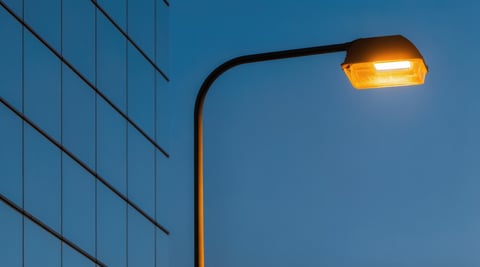
Engineering – Smart Street Lighting Business Case for the East London Industrial Development Zone

East London Industrial Development Zone SOC Ltd | South Africa | Smart Street Lighting Business Case and Delivery Model | 2026

East London Industrial Development Zone SOC Ltd | South Africa | Smart Street Lighting Business Case and Delivery Model | 2026The East London Industrial Development Zone developed this business case to support the conversion of its conventional high-pressure sodium street lighting network to a smart LED-based system as part of a broader strategy to reduce operating costs, lower energy demand and carbon emissions, and strengthen its positioning as an eco-industrial and innovation-led zone. The proposed project covered 364 street poles and 415 light fittings, replacing existing 150W HPS lamps with 32W LED units fitted with smart controllers and supported by an on-premise management platform. Beyond direct lighting efficiency, the concept was designed to create a connected infrastructure layer with functions such as remote diagnostics, lumen failure alerts, runtime tracking, energy reporting, programmable lighting schedules, event-based lighting increases for security, and future integration with cameras, air quality sensors and other smart city systems. The business case built on earlier UNIDO/NCPC work and a pilot conducted with Trilliant, then translated the opportunity into a practical implementation and procurement model in which a service provider would finance the project and be remunerated through a share of achieved savings until payback. Based on the pilot modelling, the project was estimated at R1.712 million excluding VAT, or R1.969 million including VAT, with annual operating costs of about R228,672, approximately 80% electricity savings, and a significantly longer lamp life for LED compared with HPS. The project also included installation, testing, commissioning, staff training and a requirement that ELIDZ retain ownership of operational data through locally hosted systems. Strategically, the initiative was positioned not only as an energy efficiency measure, but also as a first step toward a Smart Park platform that could support localisation, ICT skills development, data-driven infrastructure management and potential future smart city service expansion across the metro and province.
SDGs aligned: SDG 7; SDG 9; SDG 11; SDG 12; SDG 13.
ehouse (2)

Engineering – EPC Procurement Management for New Malt Factory

Soufflet Malt SA | South Africa | Tender Analysis and Procurement Support | 2024

Soufflet Malt is developing a new 93,000 t/year malt plant south of Johannesburg to supply Heineken, with commissioning targeted for the end of 2026 and a long-term ambition aligned with carbon neutrality objectives. In a South African context marked by both high grid carbon intensity and electricity supply instability, we previously supported the concept and feasibility studies that led to the selection of a hybrid energy solution based on gas engines with heat recovery. Building on this, we were mandated to support procurement of Packages 2 and 3 through successive tender analysis phases, reviewing proposal completeness, scope alignment, constructability, technology choices, pricing structures, execution assumptions and delivery risks. Across both rounds, the work highlighted that equipment selection was a major value driver, with the supply portion representing a substantial share of total cost and boiler choice alone accounting for a large part of the investment. The analysis also identified several optimisation levers before award, including reducing Phase 1 to one 150 m³ hot water storage tank with provision for future expansion, optimising piping lengths and layout, refining storage tank material strategy, and reassessing the backup boiler philosophy. It further clarified the relative merits of boiler, pump, heat exchanger and air-heating options in the South African market, while helping narrow the project to a limited number of credible implementation pathways. The outcome was a clearer procurement roadmap that strengthened scope definition, improved cost-performance trade-offs and de-risked the delivery strategy for a strategic lower-carbon industrial energy system.
SDGs aligned: SDG 7; SDG 9; SDG 12; SDG 13.
HVAC

Engineering – Energy Performance Contracting for Large Scale eThekwini Municipal Buildings

eThekwini Metropolitan Municipality | South Africa | Public Buildings Energy Efficiency and Solar PV EnPC Project Concept | 2025

For eThekwini Metropolitan Municipality, we developed the project concept and technical, institutional and financial basis for an Energy Performance Contract covering a first bundle of seven priority public buildings under the Energy Efficiency in Public Buildings and Infrastructure Programme. Drawing on audits and due diligence undertaken between 2019 and 2025, the work consolidated a package of demand-side and on-site generation measures including LED lighting retrofits, HVAC upgrades, water-heating modernisation through solar thermal, and behind-the-meter solar PV. Across the seven facilities, the project established an estimated baseline electricity consumption of 1,688,855 kWh/year and identified a pathway to reduce grid consumption to about 660,040 kWh/year through 745,154 kWh/year of energy-efficiency savings and 283,661 kWh/year of embedded renewable generation. The proposed investment envelope totals R18.15 million, including R14.85 million for energy-efficiency measures and R3.30 million for solar PV, with estimated gross savings of R3.38 million per year, a simple payback of 5 years and 4 months, and annual avoided emissions of 945 tCO₂e. Beyond the technical intervention design, the project also set out the implementation architecture for a shared-savings EnPC, including ESCO participation, metering and M&V requirements, legal and procurement pathways, risk management, municipal capacity building and a phased delivery roadmap. The analysis highlighted City Fleet as the strongest economic anchor of the package, confirmed embedded solar PV as a key profitability driver, and positioned the programme as a scalable municipal retrofit model aligned with eThekwini’s Climate Action Plan, local economic development goals and South Africa’s Just Energy Transition agenda. The concept further estimated a job-creation potential of about 20 direct and 30 indirect jobs, while supporting local content development and long-term municipal energy management capability.
SDGs aligned: SDG 7; SDG 9; SDG 11; SDG 12; SDG 13.
H2

Advisory – Technical Audit for the KfW Green Hydrogen Grant Arrangement

Industrial Development Corporation (IDC) & KfW Development Bank | South Africa | Technical Audit & Advisory for Green Hydrogen / PtX Projects | Ongoing

South Africa’s emerging green hydrogen market requires catalytic PtX projects to demonstrate compliance with robust technical, environmental and social criteria before they can credibly access grant support and progress toward bankability. The client needs an independent audit framework to assess whether selected projects meet minimum requirements related to renewable electricity additionality, carbon intensity, water use, sustainable carbon sourcing, land use, biodiversity and relevant certification schemes, while also supporting the country’s broader decarbonisation objectives. We support IDC, under the KfW-funded Promotion of Green Hydrogen in South Africa Programme, to structure and deliver an independent technical audit and advisory approach for selected PtX projects before financial close and after commercial operation. In partnership with TÜV SÜD, we combine hydrogen certification expertise with local environmental, regulatory and stakeholder knowledge to review project documentation, assess permitting and E&S risks, validate key technical assumptions, model energy and mass balances, verify compliance against KfW/IDC criteria and relevant certification frameworks, and conduct post-COD monitoring and site-based verification. This assignment helps establish a transparent, credible and investment-ready foundation for South Africa’s green hydrogen economy while aligning project development with climate, inclusion and sustainability objectives.
SDGs aligned: SDG 7; SDG 9 ; SDG 13.
Social Housing

Advisory – Social Housing Energy Retrofit Framework

C40 Cities Climate Leadership Group, Inc. | South Africa | Social Housing Energy Retrofit Decision Framework | Ongoing

The client needs to address a structural gap in social housing retrofit planning across South African cities: municipalities are under pressure to improve affordability, energy security and decarbonisation outcomes, but often lack standardised and defensible tools to assess, prioritise and structure interventions at scale. We support C40 Cities Climate Leadership Group to develop a decision-grade framework for five metropolitan municipalities that helps cities and social housing institutions move beyond fragmented pilots toward scalable and bankable retrofit programmes. The framework is portfolio- and precinct-based rather than building-by-building and integrates technical, financial, regulatory, institutional and social dimensions into one practical decision tool. It includes Global South benchmarking, social housing typologies, energy baseline analysis, energy-efficiency retrofit options, rooftop solar PV suitability, financial and affordability logic, operations and maintenance planning, and delivery and procurement pathways. The approach is designed to provide clear go/no-go/further-study thresholds, prioritise energy efficiency before solar, address split incentives between landlords and tenants, and account for tariff structures, procurement constraints, affordability impacts on low-income households and municipal revenue implications. The result is a scalable framework intended to help municipalities identify priority clusters, define typology-based intervention packages and build procurement-ready retrofit pipelines aligned with Just Energy Transition principles.
SDGs aligned: SDG 7 ; SDG 11; SDG 13.
Gas Power Plant

Engineering – Energy Efficiency Audit – CIPREL Thermal Power Plant

CIPREL | Côte d’Ivoire | Industrial Energy Efficiency Audit | Ongoing

The client needs to address several strategic challenges at its combined-cycle thermal power plant: controlling the site’s overall energy consumption, sustainably reducing electricity production and operating costs, improving energy management in a context of fuel flexibility between natural gas, DDO and HVO, strengthening compliance and performance under its ISO 50001-certified energy management system, and identifying high-impact techno-economic optimisation levers. We support CIPREL in carrying out an energy-efficiency audit of its power plant, which includes six gas turbines, one steam turbine and two heat-recovery boilers, to assess energy uses, consumption patterns, significant energy uses, influencing factors and key performance indicators and define an energy-performance improvement plan. Our mandate covers historical data analysis, an instrumented on-site measurement campaign, energy-balance modelling, and identification, prioritisation and planning of technically and economically relevant optimisation actions, including ROI calculations and CAPEX estimates. The approach is based on EN 16247, ISO 50002 and IPMVP standards, within a four-week delivery schedule, culminating in a final report and prioritised action plan.
SDGs aligned: SDG 7; SDG 9; SDG 13.
Steel Manufacturing

Engineering – Energy Efficiency Audit Steel Manufacturing

EDF / SOTACI | Côte d’Ivoire | Initial Energy Review for Industrial Site | Ongoing

The client needs a rapid, decision-oriented view of the site’s energy performance to identify major consumption areas, detect inefficiencies and prioritise future investments without waiting for a full regulatory audit. We support EDF on the SOTACI site to deliver an Initial Energy Review designed to provide a macro-level diagnosis of energy use and highlight the most relevant short- and medium-term efficiency opportunities. Our approach combines analysis of the last 24 months of utility consumption and supply contracts, a one-day flash technical site visit focused on utilities and key processes, and targeted interviews with site representatives to capture operational constraints. Based on this review, we develop a concise decision-support package including a consumption profile by use, performance benchmarking, a prioritised matrix of energy-saving actions, simplified estimates of annual savings and investment needs, and a practical roadmap for next steps. The assignment enables the client to move quickly from data to action by identifying no- and low-cost measures, short-payback investments and longer-term structural improvements requiring deeper engineering studies.
SDGs aligned: SDG7; SDG 9; SDG 12.
HVAC

Advisory – EU ASPIRE Programme Energy Efficiency

European Union / Government of Botswana | Botswana | Technical Assistance for Energy Efficiency | Ongoing

The client needs to accelerate implementation of energy-efficiency measures in Botswana by moving beyond policy intent toward practical action across public and private sectors. This requires stronger stakeholder awareness, improved technical capacity, better energy-data systems and a pipeline of actionable audits, retrofit studies and pilot projects. We support the ASPIRE Botswana programme to implement Outcome 2 by combining strategic, technical and market-oriented interventions. Our mandate includes assessing the national energy-efficiency context, organising awareness-raising campaigns for priority stakeholder groups, delivering knowledge-sharing workshops for specialists and supporting creation of a web-based energy-data collection and analysis system for the national energy balance. We also contribute to the definition of investment-focused scopes of work for distribution-loss reduction, delivery of retrofitting studies for pilot public buildings, promotion of ESCO-led energy audits in large energy-consuming facilities and implementation of pilot energy-efficiency actions. Through this assignment, we help translate energy-efficiency ambitions into practical, scalable and inclusive interventions that strengthen institutional capacity, unlock investment-ready opportunities and support Botswana’s sustainable energy transition.
SDGs aligned: SDG 7 ; SDG 9 ; SDG 13.
HVAC

Advisory – SANEDI EEPBIP Transaction Advisory for Public-Sector Energy Efficiency Projects

SANEDI | South Africa | Transaction Advisory for Energy Performance Contracting with ESCOs | Ongoing

The client needs to unlock large-scale energy-efficiency investment in South Africa’s public sector, where ageing infrastructure, limited technical capacity and constrained access to finance have slowed development of viable projects despite significant savings potential. We support SANEDI to help public-sector entities transform energy-efficiency and climate-resilience ambitions into bankable projects under a performance-contracting model with Energy Service Companies. Our mandate covers project conceptualisation, technical and institutional due diligence, preparation of Concept Business Cases, development of MFMA-aligned tender documentation, financial structuring and support through tender implementation. We also help identify concessional and blended-finance pathways, integrate renewable-energy options, assess greenhouse-gas reduction and job-creation potential and strengthen institutional capacity through workshops, tools and methodological guidance. By combining transaction advisory, procurement support and capacity building, the assignment helps public institutions move from fragmented project ideas to structured, finance-ready and performance-based investment programmes that can accelerate implementation and improve public-sector energy performance at scale.
SDGs aligned: SDG 7; SDG 11; SDG 13.
Cold Storage

Engineering – GeoFridge/Geodry Pilot for Renewable Cold Storage from Geothermal

Rwanda Energy Group (REG) | Rwanda | Geothermal-Based Cold Chain Demonstrator | Ongoing

The client needs to address high post-harvest losses, unreliable electricity supply and the high cost of cold storage in rural agricultural areas, all of which constrain food preservation, agro-processing and local income generation. We support Rwanda Energy Group to develop the GeoFridge concept: a pilot cold-storage solution designed for the Bugarama-Ruhwa region that combines geothermal energy, solar thermal and photovoltaic power to deliver low-carbon refrigeration for agricultural products. Our mandate covers functional definition of the cooling system, detailed studies, fabrication, installation and commissioning of the demonstrator, as well as training for the beneficiary and analysis of operational feedback to improve the prototype. The project also includes optimisation of the business model, impact assessment and preparation of a regional deployment plan and East Africa opportunity mapping. By integrating three mature technologies into a single rural cold-chain solution, the project aims to reduce electricity consumption significantly compared with standard refrigerated containers while improving food preservation, strengthening resilience in off-grid or weak-grid contexts and creating a scalable pathway for renewable cooling in agricultural value chains.
SDGs aligned: SDG 2; SDG 7; SDG 13.
Cooling System

Advisory – GIZ EEPBIP Energy Performance Contracting Transaction Advisory

GIZ | South Africa | EEPBIP Transaction Advisory | 2024–2025

The Energy Efficiency in Public Buildings and Infrastructure Programme (EEPBIP) was established to accelerate large-scale energy efficiency investment across South African municipalities, provincial governments and State-Owned Entities, using Energy Service Companies (ESCOs) and Energy Performance Contracts to overcome capacity, project-development and financing barriers. The transaction advisory assignment was structured to support public-sector institutions from project conceptualisation through development of bankable business cases, tender preparation and ESCO procurement. The technical scope included review of energy audits, electricity billing data and energy baselines; identification and quantification of bankable efficiency measures; high-level assessment of small-scale embedded generation, including solar PV; and preparation of technical specifications. Financial analysis covered CAPEX, operating and maintenance costs, NPV, IRR, dynamic payback, energy-cost savings and greenhouse-gas reductions, together with identification of complementary funding sources and advice on project financing structures. The scope also incorporated socio-economic analysis, Measurement and Verification and programme monitoring arrangements, preparation and adaptation of Invitations to Tender and Energy Performance Contracts, and technical, financial, legal and socio-economic backstopping during bidder clarifications, evaluation, funding review and contract negotiations. Capacity development was embedded through institutional workshops and training, with the assignment scheduled from July 2024 to June 2025.
SDGs aligned: SDG ; SDG 9 ; SDG 11 ; SDG 13.
ehouse (12)

Engineering – Industrial Energy Efficiency Audit – EUROLAIT / EUROFIND Group

EUROLAIT / EUROFIND Group | Côte d’Ivoire | Industrial Energy Efficiency Audit

EUROFIND seeks to strengthen energy performance across its five Ivorian sites through a structured programme focused on controlling overall energy consumption, reducing operating costs and identifying high-impact optimisation opportunities. For EUROLAIT, Manergy-Iroko, in partnership with EDF Power Solutions, proposes an energy-efficiency audit aligned with EN 16247-3 and ISO 50002. The assignment will assess energy uses, consumption patterns, influencing factors and key energy-performance indicators, supported where required by instrumented measurements of electricity, temperature and flow to improve the reliability of the analysis and savings calculations. The methodology includes analysis of historical energy data, equipment inventories, detailed energy modelling and benchmarking, followed by identification and techno-economic assessment of improvement measures. Each opportunity will be prioritised on the basis of expected energy savings, investment requirements and return on investment, resulting in a practical action plan to support sustained efficiency improvements and informed investment decisions.
SDGs aligned: SDG 7 ; SDG 9 ; SDG 12.
Mauritius

Advisory – Core Transition Planning Framework Development

MIoD | Mauritius | Core Transition Planning Framework Toolkit | Ongoing

MIoD seeks to establish a common transition-planning architecture that enables Mauritian organisations to convert material climate and sustainability exposures into governed actions, investment decisions, measurable targets and credible Corporate NDC Pledges. Iroko Africa proposes to develop a practical Core Transition Planning Framework integrating governance, strategy, risk management, targets, implementation, financing, monitoring and disclosure, while translating Mauritius’ NDC 3.0, the Green Taxonomy and relevant international standards into actionable guidance. The framework is structured around three cumulative application tiers—Foundational, Developing and Advanced—to provide proportionate requirements for organisations of different sizes, maturity levels and climate exposure. Our proposed scope also covers interoperability with topic-specific toolkits, common definitions and evidence requirements, action prioritisation incorporating CAPEX, OPEX and financing needs, alignment with climate- and sustainable-finance pathways and mapping of relevant metrics to the Corporate NDC Pledge Platform. The proposed eight-week programme includes framework inception, coordination with topic-specific consultants, development of the draft toolkit and editable application tools, three tier-based consultation sessions, refinement and final handover.
SDGs aligned: SDG 12 ; SDG 13 – Climate Action.
Mauritius Economy

Advisory – Energy, Emissions, Transport and Climate Resilience Application Toolkits

MIoD | Mauritius | Climate and Sustainability Application Toolkits | Ongoing

MIoD is developing a Climate and Sustainability Transition Planning Toolkit Suite to help Mauritian companies translate climate ambition into credible, implementable and finance-ready transition plans aligned with Mauritius’ NDC 3.0 and relevant international frameworks. Iroko Africa proposes to develop two Mauritius-specific Application Toolkits covering Energy, Emissions & Transport and Climate Resilience & Disaster Risk. The first will address energy consumption, Scope 1, 2 and relevant Scope 3 emissions, efficiency, renewable energy, transport and low-carbon mobility, enabling organisations to establish reliable baselines and develop costed, monitored decarbonisation roadmaps. The second will translate physical climate risks—including cyclones, flooding, coastal and sea-level risks, drought and water stress—into prioritised resilience, preparedness, adaptation and recovery measures. Our proposed scope combines tiered implementation pathways for Foundational, Developing and Advanced organisations, sector guidance, editable assessment and action-planning tools, targets and financing guidance, metrics and reporting frameworks, and interoperability with the Generic Transition Plan and Corporate NDC Pledge Platform. The planned eight-week programme includes inception and common architecture design, standards and evidence crosswalking, development of both toolkits, technical quality review and platform mapping, three tier-based user sessions, refinement and final handover.
SDGs aligned: SDG 7 ; SDG 12 ; SDG 13 – Climate Action.
Plastic Manufacturing

Engineering – Detailed Engineering Study for Fuel-Switching Cogeneration

MIoD | Mauritius | Core Transition Planning Framework Toolkit

The client needs to modernise SIMPA’s industrial site in Yopougon, optimise its energy mix and reduce operating costs by valorising waste heat from a 2 MWe natural-gas generator to meet chilled-water needs. We support ADEMAT on the thermal engineering and owner’s engineering scope of the SIMPA project, from detailed design through works supervision and commissioning support. Our mandate covers the initial energy audit, integration of the existing waste-heat recovery system on the gas engine and flue gases, sizing of a 110°C hot-water storage system, integration of an absorption chiller for chilled-water production, design of chilled-water buffer storage, HAZID analysis and preparation of layout and civil-engineering input data. We are also assisting during procurement and construction through technical bid analysis, review and approval of execution documents, site monitoring, supervision of pressure, tightness and performance tests, and verification of regulatory controls related to gaseous emissions, including NOx. The mission is structured over a planned nine-month period and mobilises a multidisciplinary team for 89 person-days, with key milestones covering audit and preliminary design, thermal execution design, site supervision, thermal commissioning and final DOE handover.
SDGs aligned: SDG 7 ; SDG 9 ; SDG 13.
Steel Manufacturing

Engineering – Industrial Energy Efficiency Audit – ACIERIES / EUROFIND Group

ACIERIES / EUROFIND Group | Côte d’Ivoire | Industrial Energy Efficiency Audit

The proposed ACIERIES assignment forms part of EUROFIND’s programme to assess and improve energy performance across five industrial sites in Côte d’Ivoire. The programme focuses on controlling overall energy consumption, reducing operating costs, improving management of electricity and other energy sources and identifying optimisation measures with strong techno-economic potential. Manergy-Iroko, in partnership with EDF Power Solutions, proposes to undertake the audit in accordance with EN 16247-3 and ISO 50002. The methodology combines analysis of historical energy consumption and equipment information with instrumented on-site measurements, development of an energy balance by significant use, performance benchmarking and identification of efficiency opportunities. Recommended actions will be technically and financially assessed, including calculation of potential energy savings, CAPEX and return on investment, before being organised into a prioritised improvement plan. The audit is intended to provide a rigorous basis for operational optimisation, investment decisions and structuring future energy-efficiency financing.
SDGs aligned: SDG 7 ; SDG 9 ; SDG 12.
Cacao Production

Engineering – Industrial Energy Efficiency Audit – CIE CACAOYERE / EUROFIND Group

CIE CACAOYERE / EUROFIND Group | Côte d’Ivoire | Industrial Energy Efficiency Audit

EUROFIND intends to improve the energy performance of its Ivorian industrial sites through detailed assessment of consumption, operating practices and opportunities for technically and economically viable optimisation. For CIE CACAOYERE, Manergy-Iroko, in partnership with EDF Power Solutions, proposes an energy-efficiency audit based on EN 16247-3 and ISO 50002. The proposed work will establish the audit perimeter, review historical energy consumption and available system information and undertake on-site investigations supported by calibrated measurement equipment where additional data are required. The diagnostic approach can include electrical-network analysis, thermal measurements, combustion analysis and compressed-air leak detection depending on the relevant site uses and available data. Findings will be consolidated into a detailed energy balance and a prioritised portfolio of improvement measures, with energy savings, investment requirements and return on investment assessed to support a practical energy-performance action plan and informed investment decisions.
SDGs aligned: SDG 7 ; SDG 9 ; SDG 12.
Geothermal

Advisory – African Megatrends & Geothermal Industry Assessment

AFD/AFPG | Kenya, Tanzania & Uganda | Strategic Geothermal Megatrends Assessment | 2025

AFD and AFPG needed a strategic view of geothermal-development pathways in Kenya, Tanzania and Uganda in a context of demographic growth, urbanisation, climate pressure and changing energy technologies. We were mandated to assess these pathways while distinguishing geothermal power generation from direct-use applications for heating and cooling. Our approach combined megatrend analysis with an assessment of urban growth, geothermal-resource geography, grid dynamics, climate pressures and technology trends. The study found that Kenya shows the strongest integrated geothermal profile, Tanzania presents regional power clusters and direct-use opportunities, and Uganda shows greater potential for localised direct use, shallow geothermal and geo-cooling. The report provided AFD and AFPG with a framework for comparing geothermal pathways by geography, application and market readiness.
SDGs aligned: SDG 7; SDG 9; SDG 13.
VDF_00251-copy-scaled-e1750245053558

Advisory - Ferney Agrihood Double Materiality Assessment

Ciel Properties | Mauritius | Ferney Double Materiality Pre-Assessment | 2026

Ferney sought an evidence-based view of the sustainability issues most significant to the project from both impact and financial perspectives, to support ESG prioritisation, strategic decision-making and future reporting development. Our team carried out a double materiality pre-assessment combining stakeholder salience analysis, an employee questionnaire structured around impact and financial materiality, semi-structured stakeholder interviews and thematic analysis, followed by GRI mapping, stakeholder prioritisation and an initial double materiality matrix. The work identified a concentrated set of priority themes, with biodiversity, employment, local communities and economic performance emerging as Tier 1 issues, while energy, water and effluents, indirect economic impacts and environmental compliance remained material supporting themes. The assessment also highlighted key delivery tensions around preserving a low-density, nature-led model while maintaining financial viability, strengthening community inclusion, managing climate and water resilience, and translating ESG commitments into measurable execution. The resulting framework provides a basis for strengthening sustainability governance and reporting architecture, defining KPIs and targets, quantifying priority financial effects where feasible, integrating sustainability risks into management processes and progressing towards a more mature disclosure framework aligned with investor and financing expectations.
SDGs aligned: SDG 8 ; SDG 11 ; SDG 13 ; SDG 15.
Design sans titre (1)

Advisory – Renewable Energy Co-Use Research and Guidance Research Paper

IUCN & Ipieca | Global | Renewable Energy Co-Use Compendium | 2024

IUCN and Ipieca sought to develop a practical resource to help renewable energy developers, business leads and sustainability teams identify and assess opportunities to combine solar and wind generation with other productive land and infrastructure uses, improving land productivity while increasing potential environmental, social and economic value. Our team supported the development of the compendium through desktop research, a co-creation workshop and targeted interviews and questionnaires with project developers, NGOs and specialist organisations. The research examined four principal co-use categories — agriculture, nature-based activities, urban and rural infrastructure, and mining — with a primary focus on onshore solar and wind projects. The work assessed technical configurations including agrivoltaics, solar grazing, wind and agriculture, pollinator habitats, ecosystem restoration, nature-based solutions and renewable energy integration with existing infrastructure and rehabilitated mining land. It also evaluated common technical, environmental, social, regulatory and financial risks and opportunities, supported by international project case studies. The resulting guidance sets out practical considerations for stakeholder co-design, integrated planning, monitoring and evaluation, financial viability and responsible scaling, while identifying knowledge gaps and actions needed to strengthen evidence, investment and replication of co-use approaches globally.
SDGs aligned: SDG 7; SDG 9 ; SDG 13; SDG 15.
Design sans titre (2)

Engineering – Boiler Replacement Feasibility and Technical Recommendation for SABS Groenkloof

SANEDI / SABS Groenkloof | South Africa | Technical Feasibility Study and Boiler Replacement Strategy | 2026

At the SABS Groenkloof facility in Pretoria, we assessed the modernization of a centralized hot water plant serving two main buildings and currently relying on four aging 2 MWe electric resistance boilers. As part of an Energy Performance Contracting initiative, the study analysed 30 months of high-resolution operating data to identify the most technically viable and energy-efficient replacement pathway. The analysis confirmed a highly inefficient system with a COP of around 1, a peak aggregated demand close to 3.0 MW, uneven boiler usage, and a thermal requirement now aligned with hot water production rather than steam, making industrial heat pumps a suitable alternative. Two options were evaluated: a centralized industrial heat pump plant and a hybrid heat pump plus solar thermal configuration. The recommended solution was a centralized plant based on two 1.7 MW high-temperature industrial air-to-water heat pumps in parallel, providing 3.4 MW of thermal capacity and a 10% redundancy margin over the observed peak. This configuration is expected to reduce electrical input from around 3.0 MW to about 0.85 MW, cut hot water energy consumption by 60% to 75%, significantly lower maintenance costs, and provide a robust platform for a future solar thermal phase if required. The work also defined the technical basis for the next delivery stages, including financial modelling, EnPC measurement and verification, tender preparation, and site survey activities, positioning the project as a low-risk, high-impact decarbonisation and OPEX reduction opportunity for the facility over the next 15 to 20 years.
SDGs aligned: SDG 7; SDG 9; SDG 12; SDG 13.
Design sans titre (5)

Engineering – Fuel Switching Study Dalkia – La Seyne-sur-Mer OTEC Study (Manergy Partner)

Dalkia / EDF | France | OTEC Feasibility Study (FEL2) | 2022

Dalkia and EDF wanted to assess whether seawater thermal energy from the Mediterranean could support a localized low-carbon network delivering heating, cooling and domestic hot water in La Seyne-sur-Mer. We carried out the feasibility and preliminary design study, analysing local energy demand, available marine resources, plant sizing and configuration, and comparing two scenarios: a fully renewable option and a hybrid option with limited gas backup. Our work also covered environmental impact, subsidy eligibility, CAPEX and operating risk, including specific attention to marine biodiversity. The study demonstrated two viable pathways: a first scenario reaching a 73.1% renewable share with 7,300 MWh/year of renewable production and up to 1,149 tCO2e/year avoided, and a second scenario reaching 71.4% renewable energy with 7,125 MWh/year and only 1.8% gas use at peak load. Total project CAPEX was estimated between €4.6 million and €5.65 million, with potential subsidies of up to €3.5 million. The study gave the client a clear technical and financial basis for decision-making and next-stage engineering.
SDGs aligned: SDG 7; SDG 11; SDG 13.
Design sans titre (6)

Engineering – Fuel Switching Study Aluminium Sector (Manergy Partner)

Constellium | France | Feasibility Study (FEL2) | 2023

Constellium sought to improve the energy performance of an aluminium production site manufacturing 5,000 tonnes per year and consuming around 20,000 MWh/year of gas and 22,000 MWh/year of electricity. We supported the client through a FEL2 study focused on waste heat recovery and cooling circuit optimisation, analysing the site’s thermal balance, cooling capacities and future resilience needs in a context of rising temperatures and more frequent heatwaves. The study assessed resizing scenarios for the cooling system, additional cooling uses such as workshop air conditioning through adiabatic cooling, and both internal and external heat valorisation opportunities. It confirmed that the most relevant measures could generate annual energy savings of €218k, reduce emissions by 122 tCO2e/year, and be implemented with a CAPEX of €868k and a 4-year payback period. The assignment gave the client a practical roadmap to improve cooling efficiency, recover low-carbon heat and strengthen industrial resilience while preparing potential synergies with a neighbouring facility.
SDGs aligned: SDG 7; SDG 9; SDG 13.
Cement Industry

Engineering – Fuel Switching Study New Cement Factory (Manergy Partner)

Neocem | France | New Cement Factory Feasibility Study (FEL2) | 2023

For a new cement production plant in Saint-Maximin, Neocem needed a low-carbon energy master plan consistent with its ambition to produce cement with significantly lower emissions than a conventional facility. We supported the client through a FEL2 study covering a 200,000 t/year plant based on flash calcination technology and heat recovery, with initial energy needs estimated at 54 GWh/year of gas and 12 GWh/year of electricity. Our analysis reviewed the main decarbonisation levers, including dryer electrification, rooftop and parking-lot solar self-consumption, geothermal potential for future thermal needs, and broader energy efficiency and heat recovery strategies. The study showed that electrifying the dryer was the only option capable of significantly reducing CO2 emissions at process level, despite higher initial investment and operating costs, and that complementary measures could deliver around 9% energy cost savings with a payback period of about 1.9 years. This work enabled the client to prioritise the most effective decarbonisation pathway and anticipate the electrical infrastructure implications of a lower-carbon production model.
SDGs aligned: SDG 7; SDG 9; SDG 13.
Geothermal Sources

Advisory – Climate Risk & Vulnerability Assessment for Geothermal Power in East Africa

AFD/AFPG | Kenya, Tanzania & Uganda | Climate Risk & Resilience Assessment | 2025

AFD and AFPG required a first-level assessment of how climate change could affect geothermal power generation and associated infrastructure in Kenya, Tanzania and Uganda. Our mandate covered the physical climate risks affecting cooling systems, civil works, access infrastructure and grid interfaces. We combined international literature, regional climate projections, technology benchmarking and subsystem-level vulnerability analysis across heat stress, drought, flooding, storms and geomorphological instability. The assessment found deep geothermal reservoirs to be broadly resilient, while surface and near-surface systems represent the principal sources of vulnerability. It also identified cooling-system selection as an important design variable, with different trade-offs between water dependence and hot-day performance. The work developed a 4R resilience framework covering Readiness, Redundancy, Resourcefulness and Recovery.
SDGs aligned: SDG 7; SDG 9; SDG 13.
Milk Farm

Advisory – Climate Risks & Vulnerability Assessment for Djera Milk Production

Djera Production | Côte d'Ivoire | Climate Adaptation & Resilience Assessment | 2024

Djera Production needed an assessment of the climate risks affecting forage production, livestock, milk processing and business continuity at its dairy operation in the Bélier region. Our mandate covered climate vulnerability, operational resilience and the development of an adaptation roadmap. We applied the OCARA methodology, aligned with IPCC concepts and ISO 14091, combining process mapping, site visits, stakeholder interviews, questionnaires and climate-scenario analysis. The assessment identified 14 vital or major processes, five low-resilience processes requiring priority action, and four climate-shock scenarios covering flooding, drought, bushfire and extreme heat. Thirty-six adaptation measures were prioritised, including weather monitoring, stronger water and drainage infrastructure, cold-chain efficiency, preventive maintenance and continuity planning.
SDGs aligned: SDG 2; SDG 9; SDG 13.
Heathcare

Engineering – Feasibility Study for Solar-Assisted Absorption Cooling at Waterfall Hospital

Netcare | South Africa | Feasibility Study for Low-Carbon Hospital Cooling | 2024

Netcare needed to assess lower-energy cooling options at Waterfall City Hospital, where chilled-water production represented 22% of total electricity consumption and up to 40% during summer. We were mandated to evaluate the partial replacement of two existing 261 kW vapour-compression chillers with solar-thermal and lithium-bromide absorption cooling. Our approach combined technology and supplier screening, roof-area assessment, equipment sizing, hydraulic integration, risk analysis and CAPEX/OPEX modelling across three implementation scenarios. The study identified approximately 800 m² of usable roof area, with the proposed collector configuration providing 315 kWp of thermal output. The preferred base case was estimated to save R495,260.9 per year with a 9.7-year payback. An enhanced configuration incorporating domestic hot water was estimated to save R740,604.4 per year, with a 7.8-year payback and 318 tCO₂e per year of avoided emissions.
SDGs aligned: SDG 7; SDG 9; SDG 13.
Gautrain Stations

Engineering – Energy Efficiency Audit for Gautrain Marlboro and Midrand Stations

EDF South Africa / GIBB Power | South Africa | Energy Efficiency Audit | 2024

EDF South Africa needed an assessment of energy consumption and cost-reduction opportunities at the Gautrain Marlboro and Midrand stations. Our mandate covered half-hourly electricity data, tariffs, demand profiles, site measurements and the identification of significant energy uses. The audit found average monthly electricity consumption of 84,737 kWh at Marlboro and 42,077 kWh at Midrand. Security lighting alone was estimated to account for 28% of Marlboro's daily consumption. We prioritised LED replacement, occupancy-based lighting controls and a hybrid 250 kWp solar PV and battery-storage system. The hybrid system was estimated to avoid approximately 501,000 kWh per year of grid consumption and generate around R825,000 per year in savings.
SDGs aligned: SDG 7; SDG 9; SDG 11; SDG 13.
Warehouse

Engineering – AGL Plumbago Warehouses Energy Efficiency Audit

EDF South Africa / Africa Global Logistics (AGL) | South Africa | Warehouse Energy Efficiency Audit | 2023

AGL needed to assess energy costs at its 10,087 m² Plumbago warehouse in Kempton Park. This included the performance of an existing landlord-owned PV installation and the site's dependence on diesel during load shedding. Our mandate covered utility and diesel data, tariff exposure, site inspection and the identification of practical cost-reduction measures. The audit found daily consumption of approximately 1,500–1,700 kWh, with lighting estimated to represent 65% of total electricity use. The proposed action plan included LED lighting, timers for office air conditioning and geysers, improved forklift-charging management and battery-storage integration with the existing PV system. These measures were estimated to deliver approximately R971,329 per year of savings against R1.58 million of investment, with a simple payback of 1.63 years.
SDGs aligned: SDG 7; SDG 9; SDG 12; SDG 13.
Solar Plant Madagascar

Engineering – Rural Electrification Belobaka (Manergy Partner)

Henri Fraise Fils & Cie / CAT | Madagascar | Hybrid Solar Plant for Rural Electrification | 2018

The project required a reliable off-grid electricity solution for a rural site in Belobaka. We covered the detailed design, works supervision and commissioning of a hybrid solar installation. The delivered system comprises an 80 kWp solar PV plant integrating battery storage and generator backup. The project provided a decentralised electricity-supply configuration designed to improve continuity of service while reducing reliance on fuel-based generation.
SDGs aligned: SDG 7; SDG 9; SDG 10; SDG 13.
Solar PV Liberia

Engineering – Feasibility Study Solar PV Total Old Road Service Station Monrovia (Manergy Partner)

Africa Power Systems / CAT | Liberia | Hybrid Solar Solution for a Service Station | 2018

The project required a hybrid power solution for the Total Old Road service station in Monrovia to reduce diesel-related energy costs and strengthen continuity of electricity supply. We covered the detailed design, works supervision and commissioning. The delivered configuration comprises a 15 kWp solar PV installation integrated with batteries and generator backup. The project established a hybrid electricity-supply system adapted to the operating requirements of the service station.
SDGs aligned: SDG 7; SDG 9; SDG 13.
Solar PV Gabon

Engineering – Feasibility Study Solar PV Lekedi Project – Lekedi Park (Manergy Partner)

Africa Power Systems / CAT | Gabon | Off-Grid Hybrid Solar System with Pumping | 2018

Lekedi Park required an off-grid electricity solution capable of supporting both general site demand and water-pumping requirements. We covered the detailed design, works supervision and commissioning. The delivered system comprises a 67 kWp solar PV installation combined with battery storage and generator backup. The project established a hybrid off-grid electricity configuration sized for the site's operational and pumping requirements.
SDGs aligned: SDG 6; SDG 7; SDG 9; SDG 13.
Solar PV Niger

Engineering – Feasibility Study Solar PV Aviniger Farm Niamey (Manergy Partner)

Africa Power Systems / CAT | Niger | Solar PV Self-Consumption with PV/Diesel/Grid Coupling | 2018

Aviniger Farm required a self-consumption solution to reduce energy costs and improve continuity of electricity supply at its Niamey site. We covered the feasibility study, detailed design and commissioning. The delivered configuration comprises a 250 kWp solar PV installation coupled with diesel generation and grid supply. The project established a hybrid power architecture combining onsite solar production with existing backup and grid infrastructure.
SDGs aligned: SDG 2; SDG 7; SDG 9; SDG 13.
Solar PV Benin

Engineering – Rural Electrification PROVES Project (Manergy Partner)

GAGE | Benin | Multi-Site Rural Electrification Programme with Solar and Storage | 2018

The PROVES programme required decentralised electricity solutions for multiple rural communities. We covered the detailed design and commissioning of a portfolio of rural electrification installations. The programme comprises 12 solar plants, each rated between 30 and 40 kWp and incorporating battery storage. The project established a multi-site electrification configuration based on decentralised solar generation and storage adapted to local service requirements.
SDGs aligned: SDG 7; SDG 8; SDG 9; SDG 10; SDG 13.
Cape Verde Solar PV

Engineering – Hybrid PV System for CABOPLAST Praia (Manergy Partner)

Mena Solar | Cape Verde | Hybrid PV System with Generator Backup – CABOPLAST Praia | 2019

The CABOPLAST site in Praia required a hybrid solar PV solution with generator backup. We covered the feasibility study, detailed design and commissioning. The system comprises a 70 kWp solar PV installation combined with generator backup.
SDGs aligned: SDG 7; SDG 9; SDG 13.
Solar PV Mali

Engineering – Hybrid PV System for TOTAL Head Office Lagos (Manergy Partner)

TotalEnergies | Nigeria | PV-Diesel Hybrid System – TOTAL Head Office Lagos | 2019

TotalEnergies required a hybrid solar PV solution coupled with diesel generation for its head office in Lagos. We covered the feasibility study, owner's engineering and project management, and PV-diesel integration. The system comprises a 120 kWp solar PV installation coupled with diesel generation.
SDGs aligned: SDG 7; SDG 9; SDG 13.
DRC Solar PV

Engineering – PV Feasibility Study for an Industrial Site in Pointe-Noire (Manergy Partner)

TotalEnergies | Republic of the Congo | Rooftop PV Feasibility Study – Industrial Site Pointe-Noire | 2019

TotalEnergies required an assessment of rooftop solar PV potential at its industrial site in Pointe-Noire. We covered the PV feasibility study, PV/diesel/grid integration and technical project structuring. The study assessed a rooftop PV capacity of up to 2 MWp.
SDGs aligned: SDG 7; SDG 9; SDG 13.
Copie de Iroko Africa Presentation (8)

Engineering – PV Feasibility Study for an Industrial Site in Bamako (Manergy Partner)

Mena Solar | Mali | Ground-Mounted PV Feasibility Study – Industrial Site Bamako | 2018

Mena Solar required an assessment of ground-mounted solar PV potential for an industrial site in Bamako. We covered the PV feasibility study, PV/diesel/grid assessment and technical project structuring. The study assessed a ground-mounted PV capacity of up to 4 MWp.
SDGs aligned: SDG 7; SDG 9; SDG 13.
Mali PV

Engineering – Hybrid PV System for MSF Clinic Moissala (Manergy Partner)

Médecins Sans Frontières | Chad | Hybrid PV and Battery Storage System – MSF Clinic Moissala | 2019

Médecins Sans Frontières required a hybrid solar PV solution with battery storage for its clinic in Moissala. We covered the feasibility study, detailed design and commissioning. The system comprises a 30 kWp solar PV installation combined with a battery energy storage system (BESS).
SDGs aligned: SDG 3; SDG 7; SDG 9; SDG 13.
Geothermal Power Plant

Advisory – Geothermal Direct Use for Industrial Applications in Kenya

AFD/AFPG | Kenya | Microeconomic Market Assessment & Bankability Analysis | 2026

AFD and AFPG needed an assessment of Kenya's readiness for geothermal direct-use heat in industrial applications, with particular focus on the conditions required to turn opportunities into financeable projects. Our approach combined project-level microeconomic analysis, stakeholder interviews, international benchmarking, resource-demand mapping, market-readiness screening and bankability assessment. The study identified opportunities across agribusiness, food and beverages, FMCG and chemicals, construction materials, and transport and storage. It highlighted Nakuru, Menengai and Longonot as particularly promising areas for future industrial clustering. It also identified key constraints, including regulatory support, last-mile infrastructure, site accessibility and financing costs. To address these, we proposed enabling mechanisms including demand aggregation, long-term heat-offtake agreements, industrial parks and SEZs, and targeted public and DFI support.
SDGs aligned: SDG 7; SDG 9; SDG 13.
Agro

Advisory – Geothermal Direct-Use Financing Strategy

AFD/AFPG FEXTE Kenya–Tanzania–Uganda–France (KTUF) Partnership | Tanzania | Direct-Use Project-to-Finance Framework | Ongoing

As part of Phase 2 of the KTUF geothermal partnership, supported by the Agence Française de Développement (AFD) and the French Treasury, the assignment addressed how a defined geothermal direct-use project can identify, structure and secure the capital required for implementation. We developed a repeatable Project-to-Finance Framework for agri-food applications. It sets out four steps: defining the financing case, determining the capital strategy, identifying eligible funding routes and executing the financing plan. We applied the framework to the proposed GeoFridge/GeoDry pilot at Kiejo-Mbaka, Tanzania, for which Iroko Africa is developer and EPC contractor. The pilot uses an existing 233 m well delivering fluids at approximately 70–75°C to provide around 100 kWth of continuous thermal output. This supplies three GeoFridge absorption-refrigeration units and two containerised GeoDry units, supported by solar thermal, PV and batteries for off-grid operation. The analysis identified commercial validation of the pay-as-you-go service model, rather than geothermal exploration, as the principal risk. We therefore recommended a catalytic-capital-led structure, combining capital, viability-gap and preparation grants, with concessional and commercial debt reserved for later phases once cash generation is demonstrated. Carbon finance was treated as potential supplementary revenue outside the base case. The work concluded with a prioritised fundraising plan, identifying GET.invest, PREO Technical Assistance and UNDP Energy for Growth in Africa as immediate preparation routes and develoPPP Classic as the priority deployment-finance route.
SDGs aligned: SDG 2; SDG 7; SDG 9; SDG 13.
Agro-processing

Engineering – Olam Micro-Grid Study

OLAM | Côte d'Ivoire | Industrial Power Resilience & Decarbonisation Study | Hybrid Solar, Battery Storage and Solar-Diesel Options | 2025

OLAM needed an assessment of alternative power architectures for an industrial site operating two continuous production lines, with a combined demand of approximately 96 MWh/day. We compared three options: grid-tied solar PV, a hybrid solar PV and battery micro-grid with control systems, and a solar-diesel micro-grid without battery storage. Our analysis covered operational continuity, islanding, frequency stabilisation, micro-cut protection, renewable integration and economics. The grid-tied PV option required approximately CFA 1.1 billion of investment for estimated annual savings of CFA 335 million. The hybrid micro-grid required approximately CFA 2.5 billion for estimated annual savings of CFA 710 million. The solar-diesel configuration produced the shortest modelled payback, at 2.9 years, based on CAPEX of CFA 1.175 billion and annual savings of approximately CFA 375 million.
SDGs aligned: SDG 7; SDG 9; SDG 12; SDG 13.
Cogeneration Gas

Engineering – Erium Cogeneration and CO₂ Recovery Pre-Feasibility Study

ADEMAT / ERIUM | Côte d'Ivoire | Industrial Cogeneration & CO₂ Recovery Pre-Feasibility Study | 2025

ERIUM needed an assessment of gas-fired cogeneration as an alternative to its existing boiler-only configuration for CO₂ production in Abidjan. Our mandate covered electrical-load analysis, process integration, thermal balances, risks and a preliminary CAPEX/OPEX evaluation. We also assessed the potential to combine onsite electricity generation, exhaust-gas recovery and process cooling. A 1 MW gas engine was selected as the preferred option based on payback, implementation simplicity, production stability and usable exhaust flow. The unit was assessed as capable of operating for approximately 80% of the year. The proposed configuration was estimated at CFA 792.3 million, with annual savings of CFA 416.4 million and a modelled emissions reduction of 39%, equivalent to approximately 2,490 tCO₂e/year.
SDGs aligned: SDG 7; SDG 9; SDG 12; SDG 13.
Poultry Factory

Engineering – Energy Efficiency & Fuel Switching Study Poultry Factory

Henwil Chickens | South Africa | Multi-Utility Industrial Energy Audit & Decarbonisation Roadmap | 2024

Henwil Chickens needed a detailed assessment of energy costs across its Lichtenburg abattoir, feed mill and rendering plant. Our approach combined a review of bills, tariffs and metering data with site investigations and measurement of significant energy users. The audit found that annual electricity, coal, diesel and paraffin expenditure totalled approximately R50 million, of which electricity represented R31.1 million. The abattoir accounted for 52% of measured electrical consumption, the feed mill 34% and the rendering plant 14%. We recommended measures including chiller and compressor heat recovery, solar thermal, insulation, power-factor correction, variable-speed drives, peak-period rescheduling and hybrid PV systems. Several of the identified operational measures had modelled payback periods below one year. Larger renewable and storage measures formed part of the longer-term investment roadmap.
SDGs aligned: SDG 7; SDG 9; SDG 12; SDG 13.
Rubber Manufacturing

Engineering – Energy Efficiency Audit Rubber Factory

Mainland Group | Côte d'Ivoire | Industrial Energy Audit & Decarbonisation Roadmap for a Natural Rubber Plant | 2025

Mainland Group needed an energy audit of its Duékoué rubber-processing plant, which operates entirely on onsite diesel generation. Our mandate covered production processes, utilities and support buildings. We combined operational-data analysis, field measurements, thermographic inspection and techno-economic assessment. During the July 2024–June 2025 baseline period, the plant consumed 21.69 GWh of electricity, while eight diesel generators produced 22.83 GWh, with specific diesel consumption of approximately 0.31 L/kWh. The action plan identified potential annual savings of 19.2 GWh and approximately FCFA 2.84 billion, against estimated investment of FCFA 3.29 billion, with approximately 10,776 tCO₂e/year of avoided emissions. Priority measures included a 2.4 MWp solar plant, diesel-generator optimisation, exhaust-heat recovery for drying and comprehensive energy metering.
SDGs aligned: SDG 7; SDG 9; SDG 12; SDG 13.
Solar PV

Engineering – Feasibility Solar PV Cap Ecologia (Manergy Partner)

City of Pau | France | Engineering & EPCM | 2020–2023

The City of Pau needed feasibility and engineering support to redevelop a former landfill as a ground-mounted solar PV asset. Our mandate included review of an earlier feasibility study, management and procurement options, and environmental, topographical and geotechnical investigations. It also covered contract preparation, negotiations, and performance monitoring during construction and operation. The project provided approximately 3–3.5 MWp of additional renewable capacity, with estimated CAPEX of €2.3 million. The development was also planned in relation to future electricity demand from adjacent wastewater, methanisation and methanation facilities.
SDGs aligned: SDG 7; SDG 11; SDG 13.
Cocoa Production Line

Engineering – Industrial Energy Efficiency Audit – SCCI / EUROFIND Group

SCCI / EUROFIND Group | Côte d’Ivoire | Industrial Energy Efficiency Audit

As part of EUROFIND’s five-site energy-efficiency programme in Côte d’Ivoire, the proposed SCCI assignment aims to establish a robust understanding of site energy performance and identify practical opportunities to reduce consumption and operating costs. The wider programme is designed to evaluate key energy uses and indicators, improve energy management and develop a structured group-level improvement plan. Iroko Africa, working with EDF Power Solutions, proposes to conduct the audit in accordance with EN 16247-3 and ISO 50002, beginning with scope definition and review of historical consumption and technical documentation. On-site investigations will incorporate instrumented measurements where required, followed by preparation of a detailed energy balance and comparison with sector performance ratios. Identified efficiency measures will then be quantified and prioritised through assessment of anticipated savings, CAPEX and return on investment. The final output will provide SCCI with a prioritised energy-performance improvement plan designed to support operational decision-making and future investment planning.
SDGs aligned: SDG 7 ; SDG 9 ; SDG 12.
Market Healthcare

Engineering – Technical Support for Health Infrastructure Project Development and Coordination (Manergy Partner)

AFD | Multi-country | Technical Assistance for Health Infrastructure Projects | Ongoing

The client needs flexible technical support to help structure, launch, monitor and coordinate health infrastructure projects across multiple regions while also integrating cross-cutting technical considerations such as energy performance. We support AFD, as part of a consortium with AP-HP International and Insuco, to provide technical assistance throughout the project cycle, from project identification and technical review to project or programme appraisal, start-up support, transitional project-management assistance and ongoing monitoring of projects and programmes. Our mandate also includes transversal technical inputs, notably measures aimed at improving energy performance. Designed as a framework for repeated assignments across diverse geographies and thematic contexts, this support enables targeted mobilisation based on regional and sector expertise. The assignment helps strengthen preparation and implementation of health-infrastructure investments while improving delivery quality, coordination and long-term operational performance.
SDGs aligned: SDG 3 ; SDG 9 ; SDG 13.
Geothermal Power Plant

Advisory – Geothermal Power Plant Life Cycle Assessment

AFD/AFPG | East Africa | Geothermal Power Plant Life Cycle Assessment | 2025

The client sought a clear evidence base on the environmental performance of geothermal power, to support development of the geothermal sector in East Africa. We prepared a Life Cycle Assessment (LCA) drawing on scientific literature, including a review of 46 LCA studies conducted between 1995 and 2020. The assessment compared four representative technologies: flash, dry steam, closed-loop Organic Rankine Cycle (ORC) and Enhanced Geothermal Systems (EGS). It used three indicators: greenhouse-gas emissions, water consumption and fossil resource use. The methodology applied a cradle-to-grave boundary covering drilling, construction, operation, maintenance and well closure. It used a functional unit of 1 kWh of net electricity delivered to the grid, a 30–35-year lifetime and IPCC GWP100 metrics, supported by industrial data and recognised databases including Ecoinvent. The analysis found that binary ORC systems deliver the lowest impacts, with emissions of 1.2–36 gCO₂-eq/kWh, water use of 100–300 L/MWh and fossil energy use of 0.1–0.25 MJ/kWh. Flash and steam systems ranged up to 110 gCO₂-eq/kWh and 3,000 L/MWh. We also benchmarked geothermal against other power technologies and extended the assessment to critical-mineral dependency and supply-concentration risks. The study concluded with recommended measures to reduce the footprint of geothermal power, including maximum fluid reinjection (reducing direct emissions by up to 90% in some systems), air cooling, low-carbon auxiliary power, optimised well design and cogeneration.
SDGs aligned: SDG 7; SDG 12; SDG 13.
Geothermal Wells

Advisory – Geothermal Workforce and Capability Assessment

AFD/AFPG FEXTE Kenya–Tanzania–Uganda–France (KTUF) Partnership | Kenya, Tanzania & Uganda | From Wells to Watts – Oil-and-Gas to Geothermal Capability Study | Ongoing

The study was initiated to assess whether capabilities developed in oil and gas can support geothermal power development in Kenya, Tanzania and Uganda, and where dedicated workforce development is required. We carried out a pre-screening workforce and capability assessment covering the geothermal asset lifecycle, from exploration, drilling and reservoir assessment through power-plant delivery, commissioning, grid integration and operations. Our approach combined national geothermal pipeline scenarios, available workforce and supplier evidence, training capacity and occupation-by-occupation competency mapping. Each priority capability was classified by response: transfer, bridge, build or temporarily mobilise external expertise. Against a FEXTE 2050 planning case of approximately 10.4 GW of incremental geothermal capacity, the study estimated labour requirements of around 860,900 job-years across manufacturing, construction and installation using an Africa-adjusted benchmark. It also clarified how alternative methods produce materially different results. The assessment found that oil and gas is a material feeder sector for project management, drilling, well engineering, surface facilities and maintenance, but not a volume solution. Resource geoscience, reservoir engineering, steamfield design and generation operations require dedicated geothermal or power-sector pathways. We recommended a regional, phased and demand-led response, including a five-year capability programme and a regional Capability Gap Dashboard to link project demand, available capability and delivery responses
SDGs aligned: SDG 4 ; SDG 7 ; SDG 8; SDG 9.

Turn your transition
challenge into a
deliverable project

›

Whether you are seeking to reduce industrial energy costs, decarbonise operations, strengthen asset resilience or prepare a project for financing, we help identify the best next step—and stay engaged through implementation.

Discuss your project